
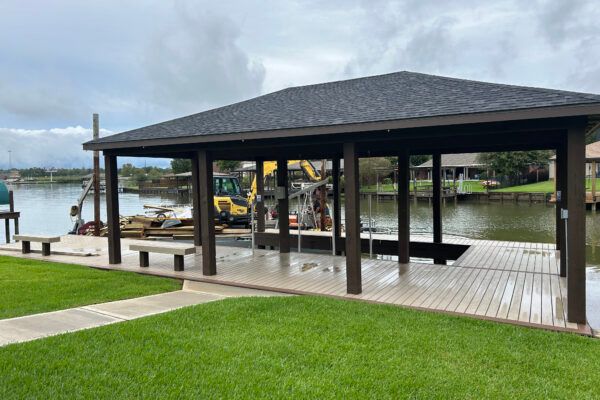
Why Most People Start Searching Dock Builders Near Me in Houston Too Late
Most folks don’t look up dock builders near me in Houston until something is already going wrong. Boards getting soft. Pilings lean a little too much. Cleats pulling loose. By then, it’s not a “nice upgrade project.” It’s a fix-it-now situation. I’ve seen it more times than I can count. Waterfront owners tend to assume a dock just sits there forever. It doesn’t. Water, weather, and wake traffic are always working it over.
A good dock isn’t just lumber slapped together over water. It’s load math, soil conditions, wave patterns, and material choices that match the site. Houston-area shorelines are especially tricky because water levels shift and soil can be unpredictable. Clay today, soft muck three feet over. That changes how a structure should be built from the ground up. Not guessing — knowing.
What Good Dock Builders Actually Do Differently
Here’s the blunt truth. Not everyone calling themselves a dock builder should be building docks. Some are general carpenters who happen to work near water. That’s not the same thing. Real marine builders think in terms of forces, not just frames. Lateral push, uplift, corrosion, scouring around pilings — that stuff matters.
When experienced dock builders near me in Houston show up, they don’t start by talking about decking color. They ask about water depth, shoreline stability, boat size, and seasonal fluctuation. They look at access for equipment. They check how waves hit the bank. It’s less about pretty, more about staying put for twenty years.
And yeah, design matters too. But structure first. Always structure first.
Materials Make or Break the Dock (Literally)
I get asked this constantly — wood or composite? The answer is annoying but true: depends on the site. Pressure-treated lumber is still common and works fine when it’s the right grade and properly installed. Composite lasts longer up top but needs correct framing underneath or it flexes like a trampoline. Not great.
Metal hardware is another place where shortcuts show up. Wrong fasteners, wrong brackets, mixed metals — that’s where failure starts quietly. You don’t see it until a joint loosens or rust blooms through. By then it’s already been compromised for a while.
Experienced dock builders near me in Houston usually stick with marine-rated hardware and don’t apologize for the cost. Because replacing cheap hardware later costs more. Twice as much sometimes.
Permits, Codes, and the Stuff Nobody Wants to Talk About
This is the part people try to skip. Paperwork. Permits. Local shoreline rules. And yeah, it matters. Around Houston and surrounding waterfront zones, requirements can change depending on whether you’re on a lake, canal, or controlled shoreline. Setback rules. Environmental rules. Sometimes HOA restrictions layered on top just to make things extra fun.
Good builders handle this upfront. Not after the dock is half built. If someone tells you “don’t worry about permits,” you should worry about permits. Because when inspectors show up — and they do — the property owner owns the problem, not the contractor.
It slows the start a bit, sure. But it keeps you from tearing out work later. Which is a brutal waste of money.
Design Choices That Actually Affect Daily Use
People tend to focus on how the dock will look from the house. Fair enough. But daily use should drive design more than the view. Think about how you step onto it with wet shoes. Where you tie off. How you carry gear down. Whether the sun cooks the surface at noon.
I usually tell folks to walk through their normal boating day in their head. Launching, loading, cleaning, tying up at night. That exercise changes layout decisions fast. Suddenly ladder placement matters. Cleat spacing matters. Shade matters a lot more than expected.
The better dock builders near me in Houston will walk you through this kind of thinking. Not rush it. A dock you use weekly should feel easy, not awkward.
Repairs vs Replacement — The Honest Line
Some contractors push replacement because it’s bigger money. Some push repair because it’s easier work. Neither answer is always right. The truth sits in the middle and depends on structure condition below the deck — the part you don’t see much.
If pilings are solid and framing is mostly sound, repairs can buy real time. Decking swaps, hardware upgrades, localized reinforcement — all fair game. But if the foundation is compromised, you’re patching a sinking boat. Doesn’t matter how nice the top looks.
Straight talk matters here. A trustworthy builder will show you the weak spots and explain the tradeoffs without the sales pitch tone. If everything is “urgent emergency disaster,” I’d get a second opinion.
Timeline Expectations (And Why They Slip)
Let me level with you. Dock projects rarely run exactly on schedule. Weather delays. Permit lag. Material delivery hiccups. Equipment access issues. Over-water construction just has more moving parts. Anyone promising a perfect timeline is either lucky or lying.
That said, experienced dock builders near me in Houston usually give realistic windows, not fantasy deadlines. They build in buffer time. They explain sequencing. Pile driving first, framing next, decking last — there’s an order that can’t be rushed too much without quality taking a hit.
Patience here pays off. Rushed marine construction tends to show its flaws early.
Choosing a Builder Without Getting Burned
References still matter. So does seeing past work in person if you can. Photos are nice, but walking a finished dock tells you more in five minutes than a gallery ever will. Feel the stiffness. Look at connections. Check alignment. Details show craftsmanship fast.
Conversations matter too. If a builder can’t explain why they’re choosing a certain method, that’s a red flag. You want someone who can translate the technical stuff into plain talk without getting defensive. Confidence and clarity usually travel together.
Price should be clear, not suspiciously low. Waterfront work has real costs — equipment, materials, skilled labor. Bargain bids often turn expensive later. I wish that wasn’t true, but it usually is.
Conclusion: Build It Right or Build It Again Later
Water doesn’t forgive shortcuts. That’s just reality. If you’re searching for dock builders near me in Houston, you’re already on the right track — just don’t pick based on speed or price alone. Ask better questions. Look at structure, not just surface. Plan for how you’ll actually use the dock, not just how it’ll look in photos.
And don’t forget the shoreline itself. A dock tied to a failing edge won’t stay stable long. That’s where Bulkhead construction comes into the bigger picture, protecting the land that supports the structure. Dock and bulkhead work best when they’re planned together, not as separate afterthoughts.
Build it solid once. Saves a lot of regret later.
FAQs
How much does it cost to hire dock builders in Houston?
Costs vary based on size, water depth, materials, and access. Small residential docks might be moderate, while complex builds with heavy piling work climb fast. Site conditions drive price more than people expect.
How long does a dock usually last?
A properly built dock with good materials and maintenance can last 20–30 years or more. Hardware and decking may need earlier replacement, but the main structure should hold if built right.
Do I need permits for a residential dock in Houston areas?
In most cases, yes. Requirements depend on the water body and local jurisdiction. Skipping permits can lead to fines or forced removal, which gets expensive quick.
Can an old dock be upgraded instead of replaced?
Sometimes, yes. If pilings and main framing are sound, upgrades are possible. If the foundation is failing, replacement is usually the smarter long-term move.